Click any text to edit it right here · click an image or link to jump to its setting
- Replace the placeholder links: Header link, Verification link, Help centre link.
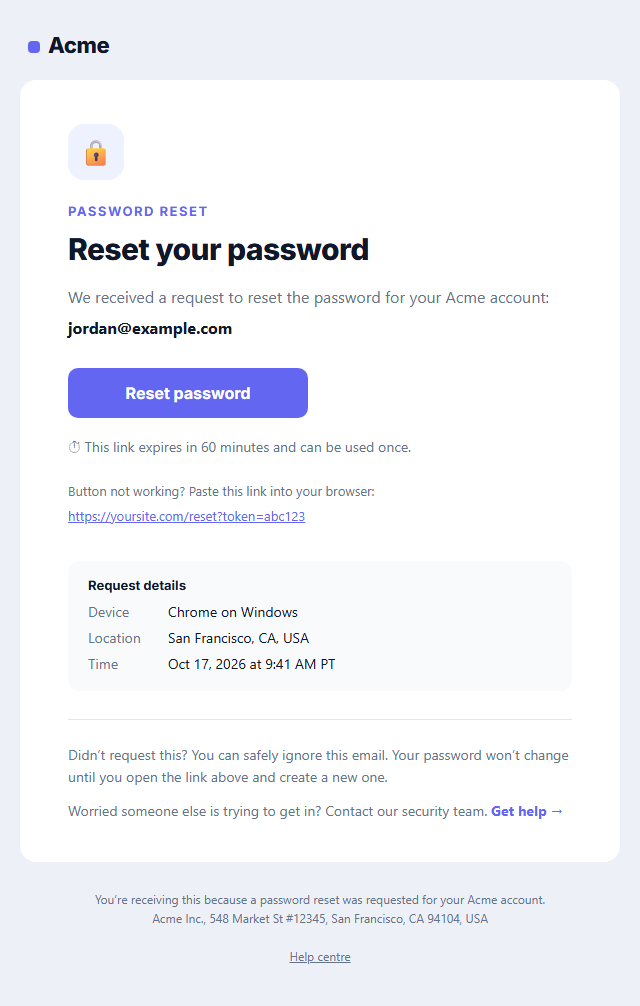
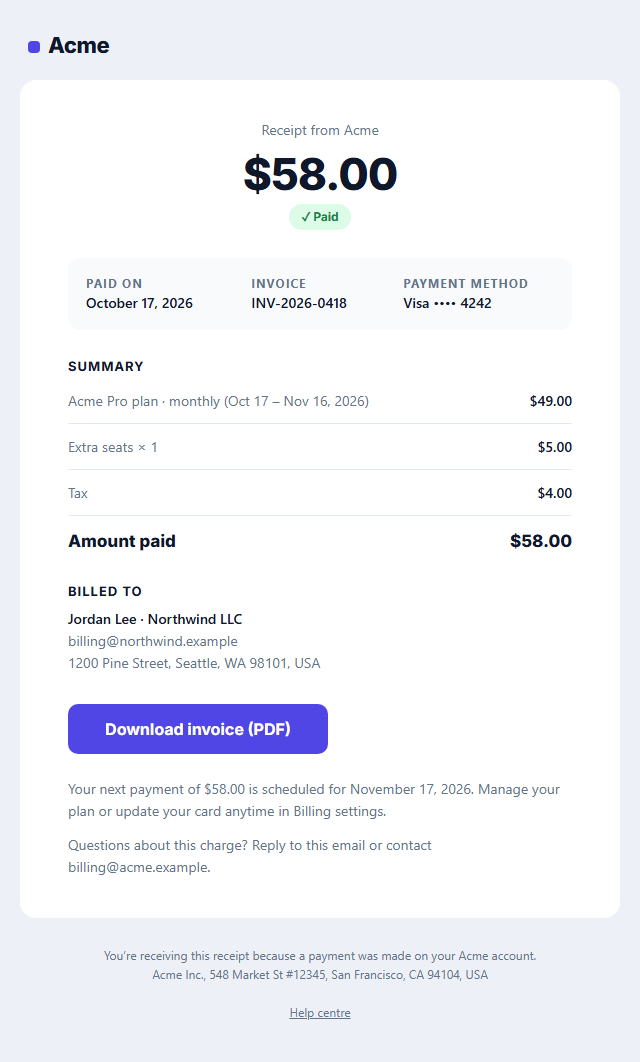
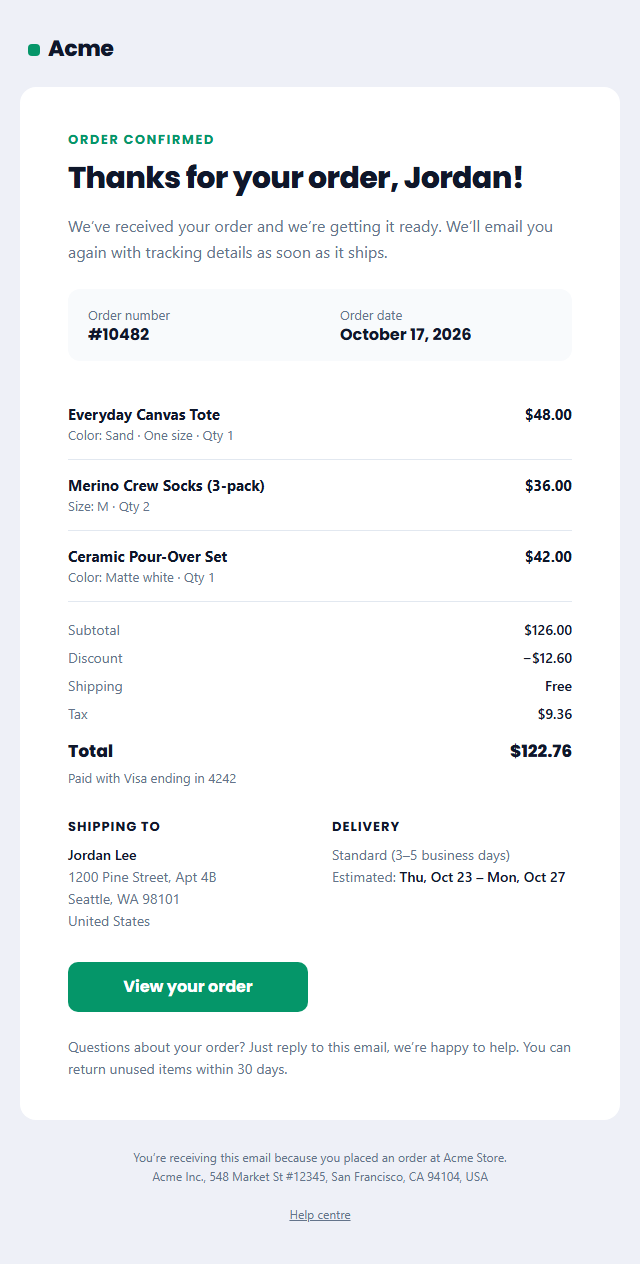
Verify Email Address — Free Responsive HTML Email Template
Transactional · v1.0.0 · Updated 2026-10-17 · Gmail, Outlook & Apple Mail · Dark mode
What's included
Features
About this template
Verify Email Address — Free HTML Email Verification Template
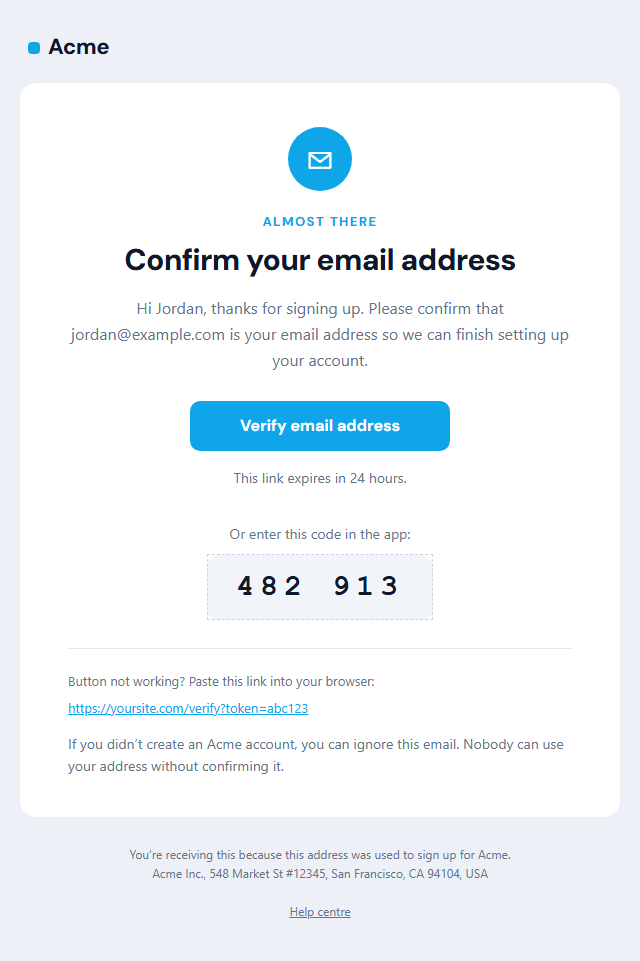
Verify Email Address is a free, responsive HTML email verification template for sign-up flows, double opt-in lists and account security. It gives people two ways to confirm: a large "Verify email address" button, and an optional one-time code (like 482 913) shown in a big monospace box they can type into your app.
Why verification emails need their own design
A verification email is the gate between a sign-up and an active user. If it is slow to understand, lands in spam or the button breaks in Outlook, the user never comes back. This template keeps one job in focus: an envelope badge, a clear headline, one sentence of context, the button, and an expiry note so people know to act now.
Button or code, your choice
Turn the one-time code section on for apps where people verify on another device, or for passwordless sign-in, and off when a link is all you need. The code uses a monospace font with letter spacing, so characters like 0 and O are easy to tell apart. A fallback link is printed under the button for anyone whose email client blocks buttons.
Coded for real inboxes
Like every template here it uses nested tables, inline styles and a "bulletproof" VML button that stays clickable with rounded corners in Outlook for Windows. A dark palette for Apple Mail, iOS Mail and Outlook.com is included, along with a hidden preheader and an automatically generated plain-text version, which helps transactional email get delivered.
Transactional, so no unsubscribe link
Verification emails are transactional: they are sent because of something the user just did, so US CAN-SPAM doesn't require an unsubscribe link. The footer still shows why the email was sent and your address, which helps people trust it.
Edit the text and colours in the browser, then send it from Postmark, SendGrid, Amazon SES, Resend, Auth0, Supabase or Firebase, or fork it into My Code. Building the rest of the flow? Pair it with the Password Reset and Welcome emails.
Why use it
Why Use the Verify Email Address Template
How it’s different
How It’s Different From Other Free Email Templates
Step by step
How to Use
- 1Set the inbox detailsWrite the sender name, subject line and preheader (the preview text shown next to the subject in the inbox). The character counts show when they get too long for phones.
- 2Edit the contentFill in the message & button and one-time code, or click any text in the preview to jump to its field. Switch the one-time code on or off.
- 3Add your brandUpload or paste your logo, set the brand colour and the light and dark palettes, pick fonts, or apply your saved brand kit.
- 4Preview and checkSwitch between desktop, mobile and dark mode, and fix anything the pre-send checks flag, such as placeholder links or missing alt text.
- 5Export or forkCopy the HTML into Postmark, SendGrid, Amazon SES, Resend or your own code, copy the plain-text version, download a ZIP with images, or fork it into My Code.
Real-world uses
Common Use Cases
Got questions?
Frequently Asked Questions
Your backend creates a unique token or code for each sign-up. Paste the link format into the "Verification link" field with a merge tag in place of the token, for example https://yourapp.com/verify?token={{token}}, and use a merge tag such as {{code}} for the code. Your email provider fills them in for every email.
Links are the fastest for most people. Codes help when people read email on a different device from the one they signed up on, and for apps without a web page. Showing both, as this template does by default, covers everyone.
No. Verification emails are transactional, sent in direct response to something the user did, so US CAN-SPAM's unsubscribe rule doesn't apply. Keep marketing content out of it so it stays transactional.
Common choices are 24 to 72 hours for sign-up links and 10 to 15 minutes for one-time codes. Whatever you choose, say it in the email, which is what the expiry note is for.
Yes. All three let you replace the default verification email with your own HTML. Copy the HTML from this editor and swap the link for the provider's variable, such as {{ .ConfirmationURL }} in Supabase.
It saves an editable copy of your Verify Email Address in My Code, the UI Snippets code editor: the email markup goes in the HTML panel and its CSS (mobile and dark-mode rules plus fonts) in the CSS panel, so you can keep refining the code and save your own versions.
Yes. It is free for personal and commercial email, with no sign-up and no watermark. Everything runs in your browser, and your edits are saved locally.